
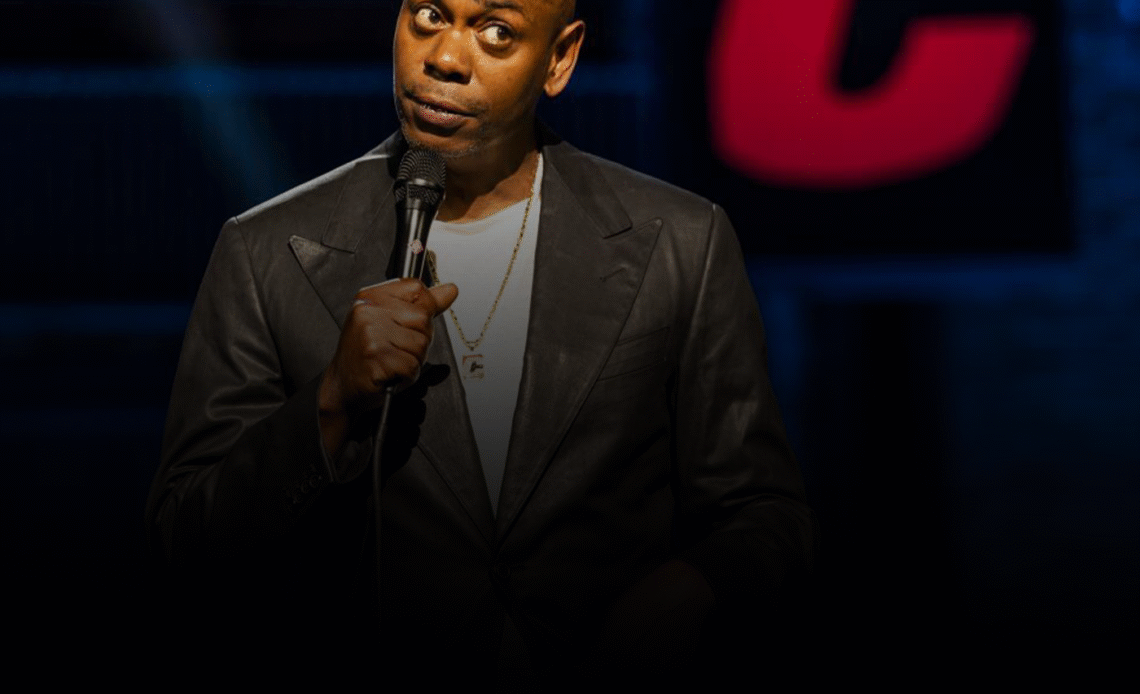
If you are a fan of any classic sitcom, you may have found yourself laughing at a specific moment only to realize, “Isn’t this a ‘throwback’ to something they mentioned episodes ago?” That sudden jolt of recognition, the feeling of being in on an inside joke, that knowing look you give before you dive into the show’s subreddit to check if anyone else noticed too…it all stems from a clever narrative device that links two seemingly disconnected moments, the setup and the callback.
What is a Callback?
Callbacks are a reference to a previously mentioned dialogue, fact, or event shown in a film, show, or even a stand-up comedy set.
The earlier reference can be in passing or a setup for a storyline. The callback reiterates that at a later point in time, often in a random manner.
In comedy shows, callbacks are done in an attempt to draw out a joke, wherein the punchline (or even a subtle reference to the previously shown idea) comes out of nowhere.
Importance of Callbacks in Storytelling
Callbacks elevate the narration and watching experience by:
Rewarding the Audience
A callback is an opportunity for the audience to recognize a reference from a previous episode/season of a series or an earlier shown moment in the film. When the viewer is able to identify these, it’s a rewarding experience for them.
Here’s an example from Parks and Recreation:
Leslie (Amy Poehler) rescues this drunken man stuck in a slide in the pilot episode (0:29 to 1:16):
He comes back as a concerned citizen in the finale (125 episodes later). The viewers who will remember him from the pilot feel like the showrunners are rewarding them for following the show from start to end.
Don’t believe us? Go check!
Building a Sense of Interconnectedness
A callback is also used to show that the writers have not forgotten seemingly open arcs or loose ends (however minor).
In Season 5, Episode 4 (aired in 2014) of the sitcom Community, we see Britta (Gillian Jacobs) get an iPod Nano.
This is a callback to Season 1, Episode 22 of the show.
During a food fight scene, her character, in a documentary-style “where are they now” segment, we see this with her image: “Proud owner, used iPod Nano, 2014.”
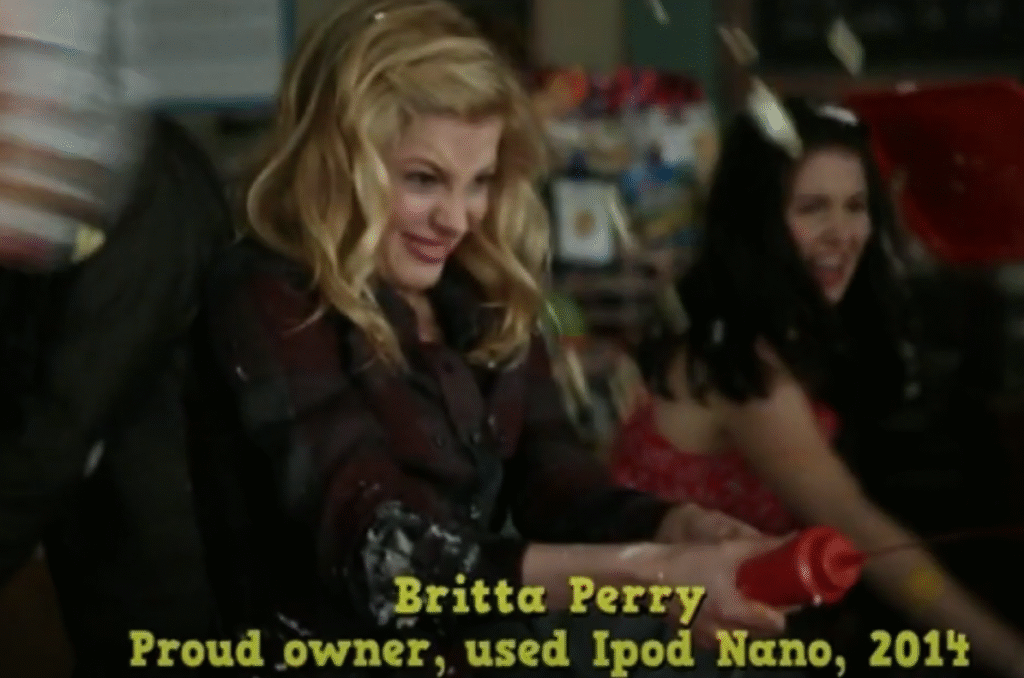
The callback to the iPod and the year is *chef’s kiss.* This moment is not a significant story arc. It’s just a hilarious moment from Season 1 that has a callback in Season 5.
Reiterating Character’s Quirks
Remember that episode in The Office (USA) when Michael burns his foot on his George Foreman grill?
That was in Episode 12 of Season 2, in which the showrunners bless us with a hilarious quirk about Michael Scott (Steve Carell). Check out 0:43 to 1:13:
And two seasons later, in Episode 13 (the infamous dinner party episode), what do we see during Michael and Jan (Melora Hardin)’s home tour?
The iconic George Foreman grill is in their bedroom (the white appliance on the low table behind Jan). That small callback confirms that he’s still grilling bacon first thing in the morning despite the injury:
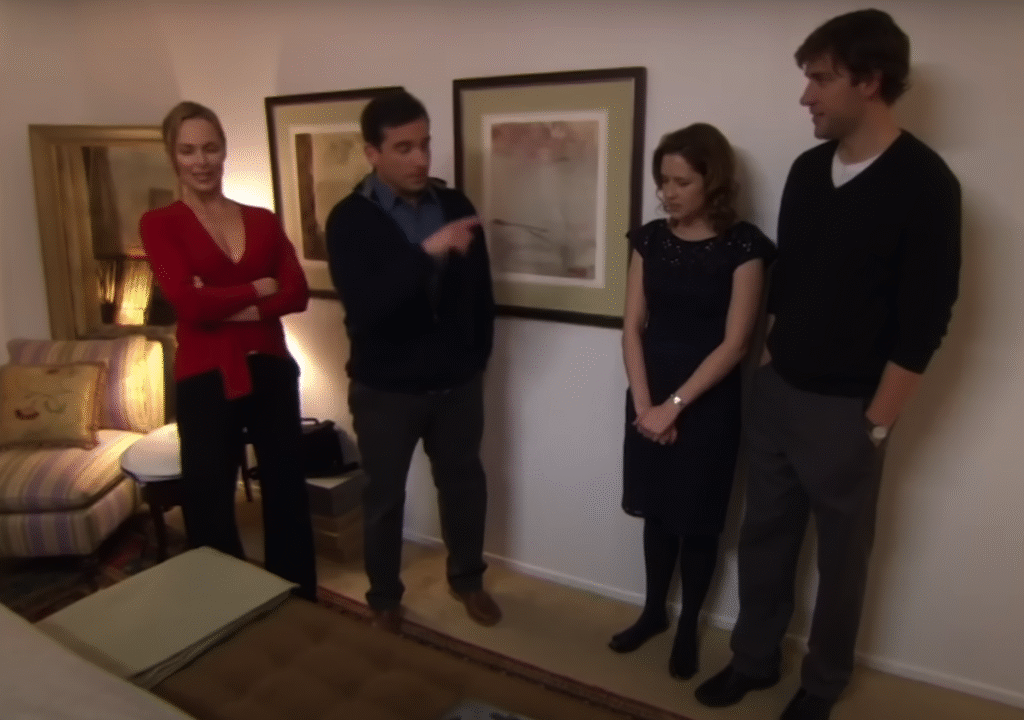
The reason why this callback works is that it’s not mentioned, nor is it related to the shenanigans in this specific episode. It silently takes you back to one of the funniest episodes of Season 2. The audience is immediately able to spot it, since the object was a significant plot point earlier.
Showing the Exact Details in a New Context
Sometimes, callbacks are in the form of a reinterpretation or brand-new context as compared to the initial mention. Check out the first 20 seconds of this clip from Season 2 of Brooklyn Nine-Nine. Captain Holt (Andre Braugher) considers any capitalized text as something that needs to be screamed out while reading:
And this one from Season 5:
The contexts are wholly different in both, but it’s so satisfying to watch Holt’s insistence on maintaining this rule, even though it’s supposed to be an official speech, especially if you remember Gina’s (Chelsea Peretti) and Terry’s (Terry Crews) reaction during the first mention.
Callback vs. Continuity vs. Foreshadowing vs. Meta-Joke
Consider the following examples:
- Two characters are talking about plane accidents, and a few episodes later, their friend is on a plane that crashes.
- A character, known for his shellfish allergy, occasionally avoids seafood buffets that his friends go for.
- We see two friends playing with fireworks, which later becomes part of a protest against a fireworks ban.
- A protagonist refers to their role in another show they worked on previously to crack a joke.
Only one of these is a callback. Can you guess which one?
Callback vs. Continuity
Continuity means maintaining consistency across the story, including facts, character details, timelines, etc. It’s about logical uniformity, not rehashing a previous fact to add humor.
For example, in Friends, we know Joey (Matt LeBlanc) is a struggling actor. Future episodes showing him at auditions or rehearsals maintain continuity. These aren’t callbacks. They are simply part of Joey’s consistent character arc, not a joke or payoff.
Callback vs. Foreshadowing
Foreshadowing is when we see a subtle clue planted earlier in the story that leads to a plot-specific payoff later. It’s a deliberate setup, unlike a callback, which is often an afterthought or recontextualization of a previous detail. It references the past, while foreshadowing drops hints about the future.
Also, only relevant facts are foreshadowed. A callback, on the other hand, often references something seemingly random or trivial from a previous episode and resurfaces it in an unrelated context, often for surprise or humor.
Callback vs. Meta-Joke
Meta-joke refers to humor that breaks the fourth wall or comments on the show itself, whether its format, structure, or tropes, as you often see in the show Fleabag. It might also draw from another show’s universe to make a cross-referential joke.
So while the above can feel like a repetition of a joke in some cases, they are not the same as a callback.
Components of a Successful Callback
A successful callback should have these non-negotiable components:
Subtlety
If the callback is screaming for attention, then it may feel forced. It cannot be too obvious. A great callback is so subtle, it resurfaces on the show’s subreddit every few years when someone rewatches the show, or it feels like an inside joke between the showrunners and its audience.
Clarity
The audience needs to understand and remember the original setup, and the callback should be clear enough that the viewer is hit with the “Oh, I get it!” moment. Otherwise, it will fall flat.
Ensuring clarity also means that you may have to be a little more than subtle, especially if the callback and the original setup are episodes (or seasons) apart.
Jay Sankey, a famous stage performer and comedian, in his book ‘Zen and the Art of Stand-Up Comedy,’ mentions that:
“You should keep in mind that the greater the amount of time elapsing between a callback and the information you’re calling back to, the greater the chance of people not remembering.”
Which is why you will notice that the showrunners dial it up a little to trigger the audience’s memory, as in the case of the Parks and Rec finale scene that calls back to the pilot scene.
They have to straddle the line between subtlety and invisibility.
Surprise
As all the above examples illustrate, when you spot a callback, it’s not just the substance of the callback but the timing of it that throws off the viewer (in a good way), leading to comedic payoff.
What’s Your Favorite Callback?
So the next time you’re rewatching a show and experience that double-take that makes you go, “Wait, that sounds familiar!” …congratulations, you have just been hit by a callback. It is like an inside joke you share with the writers, a reward for paying attention, and a gentle reminder that in the world of great storytelling, nothing is ever truly random.
Not even a George Foreman grill next to a bed.