


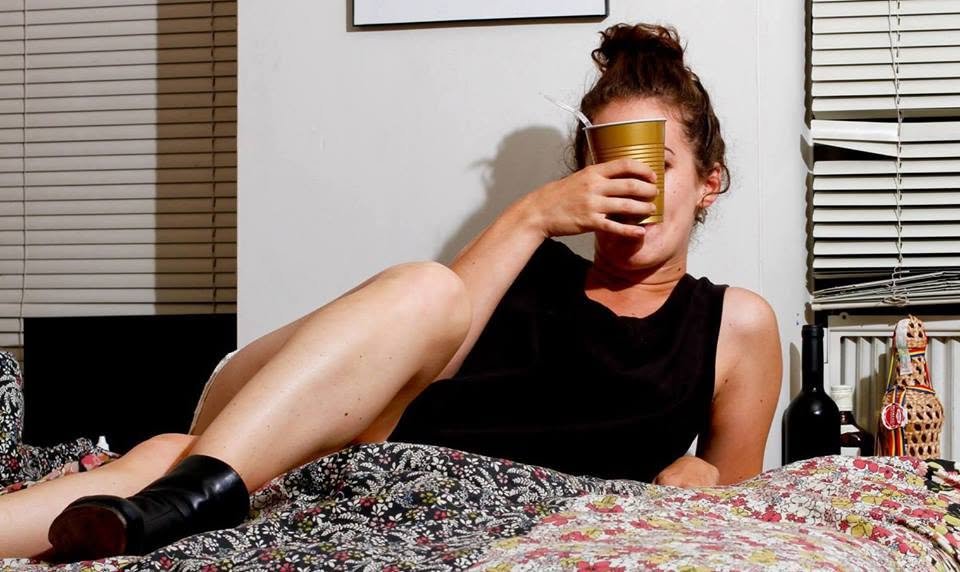
Krystyna Hutchinson has been asking strangers about their worst sexual decisions on a podcast for twelve years, so we figured turning the mic around on her was the least we could do. Turns out she’s just as unfiltered about her own life as everyone else’s.
Twelve years of Guys We Fked. Countless rooms that wanted her dead. One book about joke writing she still can’t stop rereading. She has seen some things, and she told us about all of it.

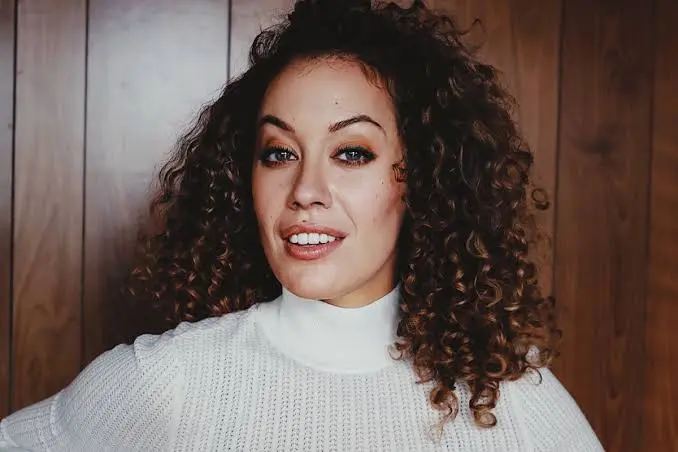
We talked about whiskey sours, bombing in laundromats, why victims never get to be the punchline, and the traumatized theater kid still running the show underneath it all. Oh, and there’s a Fringe debut coming called “Congrats On Not Killing Yourself.” Yeah, we asked about that too.
No topic was off limits. No punches were pulled. Grab a drink, this one’s a ride.
What was the moment when you decided to pursue standup comedy? Was there any particular moment that intrigued you so much, that you thought that you’ll be all about making people laugh.
I was a theater kid in high school and was cast as the lead in a one-act comedy called Medea my senior year. That was my first experience making a theater full of people laugh and I was instantly hooked. My initial dream was to be on Saturday Night Live, I worshipped Gilda Radner. I concocted a plan to intern at SNL and, after three failed interviews, I was fortunate to score an internship with their production department my senior year of college. I was the season with the Betty White episode. During the afterparty for the season finale, I downed a few whiskey sours and asked Jon Lutz what I had to do to get on the show. To my surprise (and horror) he said, “Do stand-up.”
How did it feel to get your first laugh on stage?
Euphoric. I came from a fucked up home and spent most of my energy trying to earn my parent’s love. It turns out, working to earn a laugh from a room full of strangers scratches that childhood itch in a much more productive way.
Your signature “glass of whiskey is always half full” is very simple, yet very funny. How did you come up with such a description for yourself?
I’ve always had a child-like naiveté and sense of hope about the future. Life has thrown me some fascinating curve balls that left me devastated but my sense of optimism has remained intact through it all. Being happy and hopeful is more fun than being a bitter bitch (which I have been many times, but I always smack myself out of it). I’m also a great hang and love a good whiskey on the rocks.
You’ve been working with Corinne for 15 years now. It’s almost impossible to find a partner who resonates with your comic timing, let alone stays with you for so long. What do you feel is the best part about your chemistry with her?
If I may get woo-woo, I’ve always had a feeling this isn’t Corinne and I’s first lifetime together. Comedically, she is the Yin to my Yang. We also happen to have different skill sets when it comes to the business side of things, and they’ve complimented each other well over the years. Creating with someone so closely for so long has taught me that putting effort, consideration, and time into a relationship whether it be work, romantic, or friendship, is one of life’s more satisfying gifts. Because of all the work we’ve done, we have an iron clad sense of trust when we’re on stage or on the mics together. Personality wise, we’re two very different people and that’s my favorite part about our dynamic. Our live interactive GWF shows are my favorite, we constantly surprise each other with the shit that comes out of our mouths.

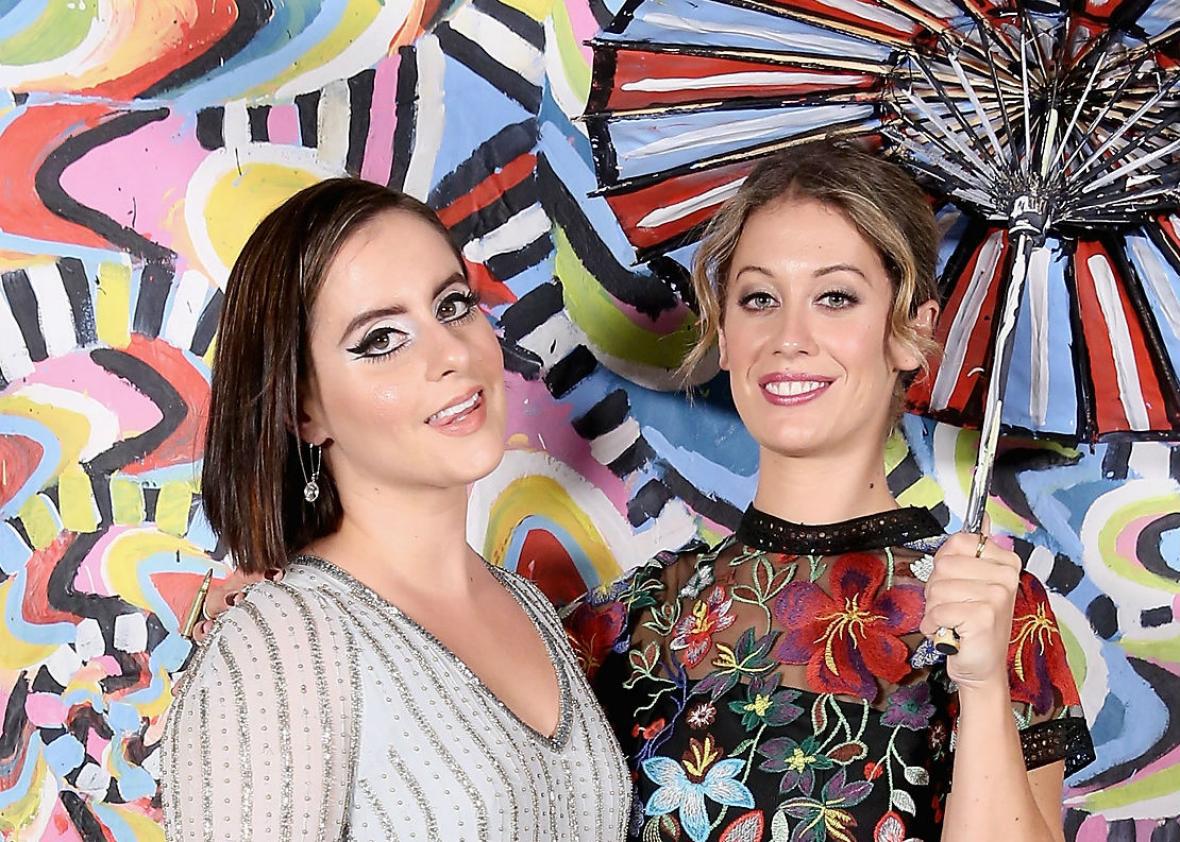
How do you create your joke? Do you riff or do strategic writing with observational thoughts? Or just stitch random experiences from your life to frame a bit?
A joke will usually be born out of me saying something funny to a close friend and realizing, “that’s a bit!” From there, I write half the joke out with a pen and paper (typing just doesn’t do it for me) and give myself room to riff on the premise on stage. Fortunately for me, my life is not boring. I have what feels like an endless well of insane life experience to talk about on stage so my act is more autobiographical.
What do you do with a joke that should work on paper but consistently dies in the room? Do you keep rewriting it, retire it, or trust that a different audience will find it funny?
I become obsessed when this happens and will usually try the joke out from a few different angles to see which one lends itself to the laugh. Because I’ve been doing stand-up for a while, I can usually tell when the joke leaves my mouth if it has legs, regardless of the audience’s reaction. Sometimes it’s something as simple as putting a beat in between two of the sentences. It’s amazing what a little breathing room can do.
The *Guys We Fked* podcast has interviewed so many people across years now. Has hosting that podcast changed the way you write stand-up — are you sharper, more honest, more careful, or all three?
I’ve shed so many layers of myself and evolved as a person while co-hosting GWF over the past 12 years, so much so that I can’t listen back to old episodes. As I’ve changed, my writing and performing style have evolved at a similar pace. Because we have candid conversations about the most intense topics you can imagine under the umbrella of sexuality, I’ve never held back with a subject matter on stage. The only thing I’m careful about is not making the victim of any kind of abuse the butt of the joke. That’s typically a newbie move but it’s a question I still ask myself before trying something out on stage.
You’ve performed in clubs, colleges, bars, basements, laundromats, and sushi restaurants. What’s the worst room you’ve ever played, and what did that night teach you about being a comic that a great room never could?
Trying to get control over a room full of people who don’t care if you live or die and would probably prefer if you just shut the fuck up is not for the faint of heart. I’m a sensitive gal who cares what people think of her, a very unfortunate combination of qualities for rooms like this. There’s this sad little kid in me that would scream, “what am I doing wrong!?” when that happened early on in my stand-up career and continuing to perform in rooms of that nature was what eventually made that traumatized part of me realize I won’t die if the crowd hates me.
You’ve written material about stuff that people are normally hesitant to write. And you’ve always been unapologetic about it, which is brilliant. But has there ever been a joke you pulled because you weren’t comfortable with it, even though the audience was?
Honestly, no. I’m a little too comfortable talking about “taboo” subjects and have never experienced telling a joke that made me more uneasy than the crowd.
You’ve the world premiere of your debut solo this summer. How’s the feeling, how’s the pressure, and what should the audience expect from it?
Yes! This show means everything to me, I’m using it as an opportunity to lean into all the traumatic things I’ve experienced and alchemize them into laughter. One thing doing GWF has taught me is that every person you encounter is a walking library. The wisdom contained in people’s life stories can be life-altering and that’s what I hope to impart on everyone who sees my one-woman show at The Fringe. No pressure! The title of the show is “Congrats On Not Killing Yourself!” and I get to dive into the darkest and weirdest parts of life experience.
Who are your standup idols?
I’ve been a fan of Nikki Glaser for as long as I can remember loving stand-up. Jessica Kirson and Lynne Koplitz are two other comics who make me laugh so hard my abs start to hurt. And of course, Sir Dave Attell. I also love Josh Johnson, Chris Turner, and Sarah Sherman. The list goes on and on, there are so many uniquely funny motherfuckers on the scene.
Who are the comedians you’re looking up for? New talents that are catching your eyes, and a word of advice for anyone who would like to pursue standup comedy?
We recently interviewed a new-ish comedian on GWF named Guy David Knoll and I’m telling you, he’s going to be a star!! As for advice for anyone wanting to pursue stand-up comedy:
- You sure?
- If yes, go to as many open mics as you can and see as many stand-up shows that your schedule and wallet will allow. Seeing both good and bad stand-up will get your wheels turning. I think it’s important to see the entire spectrum of talent.
- I wish I would have started off taking a class on stand-up comedy taught by a working comedian, but alas, I fell for the bringer show trap. I’m sure there are some decent bringer shows out there in the world, I just haven’t heard of any.
- If you don’t live in a major city (and even if you do) here’s a book recommendation on how to start writing stand-up comedy: “The New Comedy Bible” by Judy Carter. It’s available in audiobook form as well as paperback, and has an optional workbook you can purchase and write in. The advice is very basic and bare bones, but it’s a book I’ll always page through every now and then to get a refresher on the fundamentals of joke writing.
And that’s a wrap on Krystyna Hutchinson, a woman who turned a stutter-step SNL rejection and a few too many whiskey sours into a career that’s somehow still going strong twelve years later. She’s bombed in sushi restaurants, survived rooms that wanted her dead, and come out the other side still hopeful, still unfiltered, still recommending open mics to strangers like it’s a public service.
If “Congrats On Not Killing Yourself” is even half as honest as this conversation was, The Fringe has no idea what’s about to hit it.
Catch her wherever GWF lives, and if you see her with a whiskey on the rocks, buy her another one. She’s earned it.