
Rebecca Wolf auditioned for her first school play, was too shy to get a part, then watched the show from the audience and decided that was what she wanted to do. The following year she landed the role of Glenn the Gull. As she puts it now, she has gone from bird to pig and intends to work through the entire animal kingdom eventually.
The pig is Peg, the star of The Pigs Next Door, a show born from a thirty-second audition prompt: you have just received a call from the IRS. Rebecca decided the person taking that call was the third little pig, because the eldest brother had hired the big bad wolf to destroy his siblings’ houses for the insurance money. She owned a pig costume already. The character stuck.
What grew around Peg is an immersive, improvised sitcom in which the audience are the neighbours. A pink telephone gets tossed into the crowd and whoever catches it becomes a character they have just heard described. There is a stuffed animal husband called Joel, an original song, a burlesque number that is deliberately terrible, and a Boston Conservatory training in devised theatre underneath all of it. It is, in her own words, not deep. It is meant to be fun.
How have things been?
Things have been a bit hectic in my life lately, but I’m doing well overall. I got into a really bad bike accident about two months ago — I broke my nose, knocked my teeth out, sprained my wrist, and was looking crazy for a little while. I’m mostly recovered, but it definitely threw a wrench in my summer plans. And then just a lot of chaos in my life, good and bad.
But I think bad chaos is also good, because since you’re an artist, after a certain while it turns into material.
Yes, that’s true. It’s very inspiring. And chaos too — nothing ever goes as planned, and I think artists are great at incorporating the unexpected of our lives into our work. It also helps you have a perspective of gratitude, because sometimes things work out better than you could have hoped.
And how did you start as an artist? What was the first thing you did?
It started when I was a kid. I auditioned for the school play and I was really shy and scared, and I did not get a part. Then the play performed for the school — I think it was Little Red Riding Hood — and I watched it in awe and thought, oh my God, I want to do that, that looks so fun. So the next year when the play came around, I tried really hard and I got a part. And the rest was history.
And what was the role you got? Was it a comic role?
I’d say it was kind of funny. There was a trio of birds and I played Glenn the Gull. She was a seagull and they were songbirds. So that was very fun.
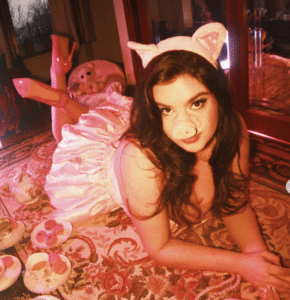
And you’ve come really far — from playing a bird to a pig character now.
Exactly. From bird to pig. I’ll make my way through the whole animal kingdom eventually. I don’t even really know how the pig happened. But I do really like animals and find a lot of inspiration in them. Animals have such strong personalities, and I’ve always been a big fan of the Chinese zodiac and how animals represent different personality traits.
And what was the first solo thing you did?
I never considered myself to be a solo artist. I always prefer to work in collaboration with other people, which is why so much of this show revolves around the audience participating in it with me. It’s a solo show, but it’s rarely just me — and even when it is, Joel is up there with me. But I started doing small solo clown acts, and stand-up as well, where you’re on stage for three to eight minutes by yourself. So I guess stand-up was technically the first solo thing I ever did.
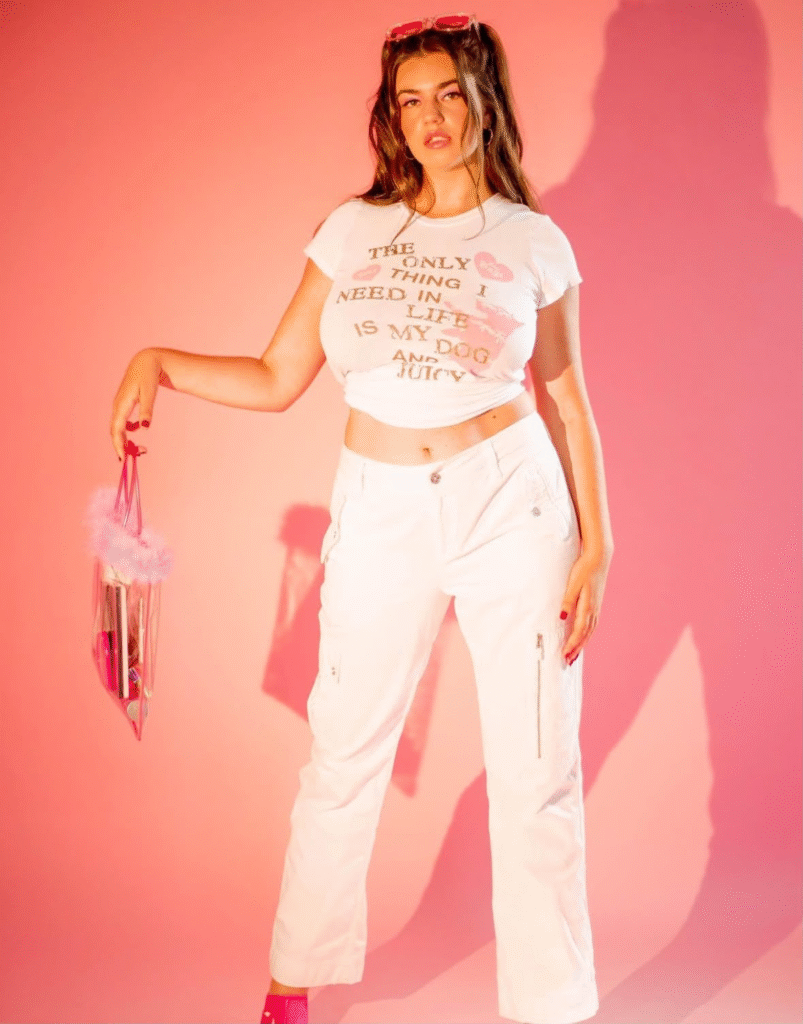
Do you remember the first room you performed in, and the first laugh you got as a stand-up?
I did stand-up for the first time in high school and it created a big stink. Our senior class always had a senior project — you had to create something and write about it, and it was supposed to be impactful to the community. People would do a community cleanup, that sort of thing. I decided I wanted to put on a comedy show. So I had a friend open for me and I did thirty, forty-five minutes of stand-up as a sixteen-year-old. I don’t think it was even very funny, but it was really fun.
And what was the stink?
I talked about my job at the time. I was a food runner and a busser at a local restaurant, and I talked about my boss and the dynamics at work. Then I put the special on YouTube and encouraged my boss and my friends to watch it — people who couldn’t come see the show in person. They watched it, and they were horrified and very angry. They called me, they threatened to sue me, they said I was a horrible person and that I’d said awful things about their business. I think I called someone a b****. I don’t think any of it was that crazy, but it made them very upset. And after that I didn’t do stand-up for a really long time, because I thought that doing it made me a bad person.
But still — a sixteen-year-old performing for thirty-five or forty minutes requires tremendous stage confidence.
I definitely didn’t have a shortage of confidence at that age. I often try to channel that version of myself when I’m feeling afraid.
Your school wanted you to do something that would send out a message, and you chose comedy. So do you think it’s easier to convey a message through comedy than through being serious?
For me, dissecting the world and the endless horrors through a comedic lens is more entertaining, frankly, and more enjoyable — because so many terrible things happen in your personal life and then on a grander scale in the world every day. Laughter as a coping mechanism is a really great way to digest some of what’s happening, and to maintain the truth of it. Because comedy does more than just make fun of things. It also siphons the truth of whatever the thing is, and flips it on its head. It makes it digestible.
And do you think performing does more than just performing? Does it heal you, or act as a venting space?
I think performing feels like something I have to do. I can’t remember a time when I didn’t feel like I needed to do it. So it’s kind of a selfish act in that way, but it’s also a way to build community, because you cannot perform without an audience. Performing for yourself alone in your room is not very exciting. Performing for a room full of people who love you is terrifying. And performing for a room full of strangers who don’t know you and don’t owe you anything, and getting them on your side, is the most gratifying, joyful feeling.
Can you remember a moment when an audience member came up and told you they loved your performance?
The moments that stand out are the performances where I got off stage thinking, oh God, that was not my best work — and somebody in the crowd was like, I loved what you did. Even when you go to an open mic and you bomb and nobody laughs, or maybe one person laughs, and then somebody pulls you aside afterwards and says, I really liked your joke about this. It reminds you that art is subjective and comedy is subjective. You can be surprised by who connects with what you have to say. Sometimes you’re your own worst critic.
But do you think it’s always the audience whose opinion matters when you’re performing?
To me, yes. I perform for the audience, for sure. And with The Pigs Next Door, the show is really about the audience. Of course it’s about me, and it’s about Joel, my very important husband. But what it’s really about is giving the audience a chance to feel important and to remember that they’re the reason anyone’s there. I can’t put on the show without them, and I don’t want to. They’re just as much a part of the show as I am. You go to a Broadway show — the show isn’t for the actors, it’s for the people who buy tickets.
And in your show, the audience are your neighbours.
Exactly. I’m using the model of a traditional sitcom like The Nanny or Full House, where we live in this world and the audience are the pigs next door. They know what’s going on, they’re in the room with us no matter what room we go into. And as the play progresses and new characters are introduced, the audience members play those characters. When I come on stage and talk about someone, that person becomes real, and I choose someone in the audience to become that person, and we improvise a scene together. Then I introduce another person, and choose someone else, and so on.
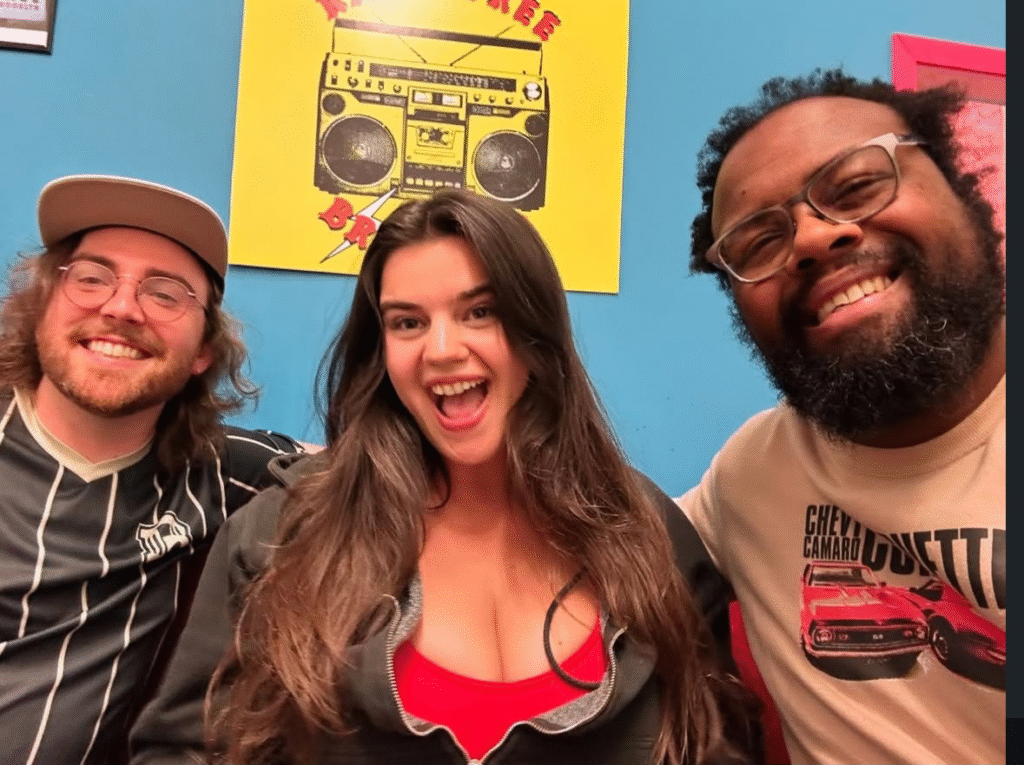
There’s a lot of clowning in the show. Did you go to clown school?
Not an official clown school. I went to the Boston Conservatory and studied contemporary theatre, which was a devised theatre programme — we were acting, writing, directing, producing and performing our own original work. We did a lot of classical training too, and lots of snippets of different methods, so we could build what they called a tool belt. Then I took a clown class and I fell in love with clown. I had this amazing teacher, Kate Amory, who’s writing a book about teaching clowning right now, and she said, you really have a knack for this, your clown feels advanced. Even though I’d only just done it.
And after that?
When I moved to New York I started doing drop-in classes at Clown Gym, which was started by Julia Proctor, who teaches clown at NYU. It was an amazing group — about forty bucks, different teachers coming in all the time. I went religiously every week, where clowns were working out, learning from different teachers and trying different exercises. And it broke me wide open. As someone who likes to talk, clown really challenges you to communicate with your body. You can say the words however you want, but your body shows the audience — and shows yourself — if you really mean it. I recommend clown to everyone, performer or not.
I was going to ask what you learned about yourself from those classes, but you’ve already answered it.
I also really learned through clown that I really like to be in charge. You play with this idea of high status and low status a lot in clown, and my clown is very comfortable in a leadership position. She is down to be the one to call the shots. Which is probably the biggest aspect of clown in The Pigs Next Door, because I’ve put the task on myself of guiding the audience through an improvised, immersive experience. I hand them the reins — or in this case a pink telephone — and say, this is who you are, and I trust them to become that person. But I need to maintain the structure of the story. It takes an authoritative presence to let an audience feel comfortable, to remind them I’m in control. I’m not afraid to say, enough, stop, you’re done. Or, no, please go on.
So let me take a wild guess at how it goes. The audience member plays a character, says something, you agree with them, turn it into a punchline, and then pave the way for them to behave the way you need so you can progress the story.
That’s a great guess. I don’t bring audience members onto the stage right away. I’ll come on, talk to Joel about a person — oh my God, Joel, you’re never going to believe what happened, Denise got arrested. So I give Joel and the audience all the backstory. Then I say I’ve got to go down to the station and talk to her, and I throw someone in the audience a pink telephone. I have my own. And I’m like, oh my God, Denise, how are you holding up? They don’t even get out of their chair. They stay right where they are, and she already knows who she is, because I just told everybody. Then we riff together. I’ll say something like, we’ve been friends for so long — and that tiny sentence tells the audience member everything they need to know about our dynamic. Everyone knows what it’s like to have a lifelong friend.
And what about the people who don’t want to be picked?
Some audience members don’t want to be chosen, don’t want to be talked to, don’t want to do crowd work. Maybe this isn’t the show for them. But there’s plenty of room to pass. I did an excerpt of this show at the Idiots Hour, a clown show run by Matthew Silver every Wednesday, where a lot of this show got developed. One night I did a bit where I’m expecting an Amazon package, and Joel of course never gets out of the chair because he can’t walk, so I go down to the driveway myself. And I say, hey, you, Amazon guy. And the guy says, me? And I say, yeah, you work for Amazon, right? And he says, no, I don’t work for Amazon. So I said, oh, my bad, sorry — and moved on to the next person. And that was actually the best gift he could have given me. Everyone laughed so loud. It worked for the show.
And have you ever met a heckler?
That’s the other side of the coin. On one side you have someone saying please don’t make me do this. On the other is the person who’s too eager and wants the show to be about them. That balance is really fun — finding the gift in someone who’s excited to be part of it, because this show is meant for people like that, while remembering that this is Peg’s moment. I had one guy who was really funny and eager to get on stage, and I hadn’t even invited him up. He was just going to come up on his own. So I said, oh, you just break into people’s houses? It was a really funny moment, because we’d established that I’m in my house right now and you’re in the driveway. That was enough to gently and politely show him where the boundary of the world of the play was, without shutting him down.
Since the show requires so much improvisation — have you trained in improv?
A lot. I did improv in high school, and then in the autumn of my senior year of college I pitched my administration: if I go to LA and take improv classes and audition for a couple of things, will you let those credits count? And they said yes, which was the best part about being in a brand new programme — it was being invented as each day went on, so we had a lot of autonomy. So I auditioned for the Groundlings, did improv there and at the Upright Citizens Brigade, and also at the LA Connection Theater in Burbank. And out of all of those, LA Connection was my favourite by far.
Why that one?
Because the stakes were low. You weren’t paying five or six hundred dollars for a course — it was a hundred bucks for the month. It was one dude in the back smoking cigarettes who threw us a bucket of hats and led us through these really zany exercises, and people were so free to play and have fun. Whereas at the Groundlings and UCB I felt immense pressure to perform well and to be funny. Everyone was tense. And improvisation is all about following your impulses — you can’t be free to follow them if you’re judging yourself or judging your partner. You can only find that flow when you’re listening.
Improv is all about agreeing with whatever the other person says. Has there ever been an instance where two people on stage were going against each other?
I’m on an indie improv team called Surprise, and something I’ve learned improvising with them is that you actually don’t have to agree with your scene partner. You’re allowed to say no, and you’re allowed to argue. The idea of yes-and being about agreement is really about agreeing to the world that you’re in and the relationship you have. If you’re improvising as a couple — couples argue all the time, and that’s actually a really funny thing to watch. Did you take out the trash? No. Well, why not? That’s more interesting than yes, honey, I did. As an audience member I find it more interesting to watch relationships that are unpredictable, and human, and relatable.
And what’s been the most difficult thing for you — stand-up, clowning, or improv?
Stand-up is by far the hardest and scariest form of comedy out of all the ones I do, and I have the least experience in it. Part of what makes it hard is that when you’re improvising you don’t have to prepare anything — you show up and you have a whole team, or at least one other person, to rely on. And when I’m doing a solo show, when I play Peg, I wrote all that material, but I’m not me. I’m Peg. I can really lean into this character I’ve created. When I’m doing stand-up it’s so personal. I’m talking about things that really happened to me. And when it’s not funny, it’s really humiliating to be bad at it. And it’s really addicting.
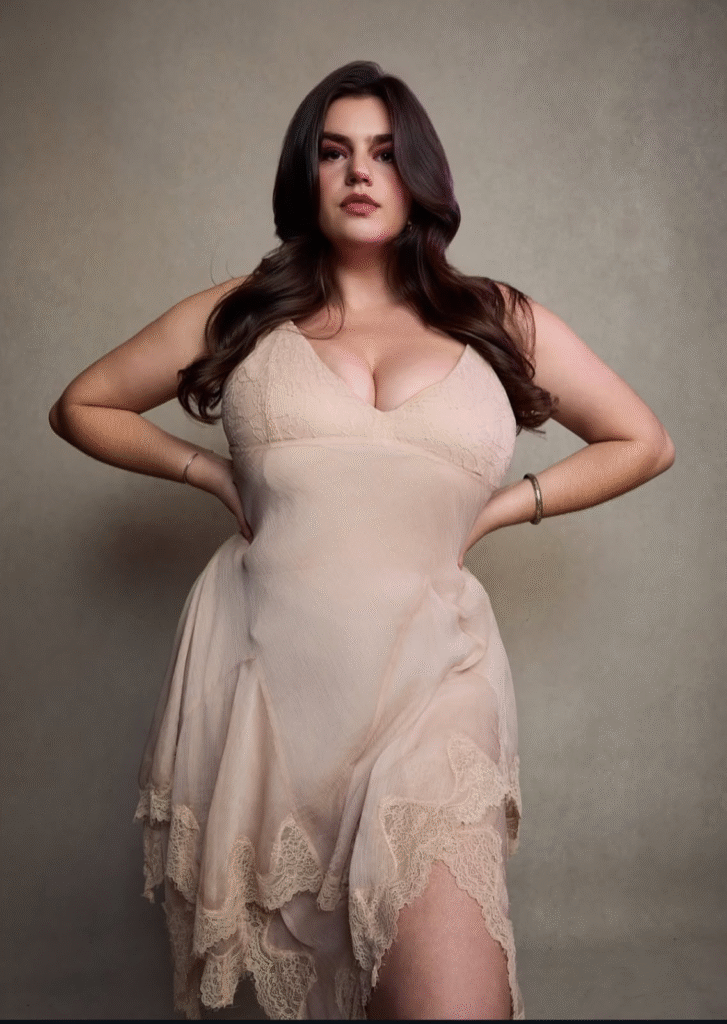
So how did the character of Peg come into your mind?
She was born out of a prompt for an audition. The prompt was: you just got a call from the IRS. That was the whole thing, and you had to do a thirty-second improvised monologue. I’d just seen a new musical about turkeys in LA and it was really inspiring, and I thought — who would be getting a call from the IRS? The third little pig from the Three Little Pigs. What if the oldest brother actually hired the big bad wolf to destroy his siblings’ homes because he wanted the insurance money, and what if he got caught by the IRS? So I did this monologue on the phone with the big bad wolf, as this pig character, in a kind of Long Island, New Jersey accent. I also work from a place of, well, what do I already have? And I had a pig costume. So I put the ears on and I was cracking myself up.
If Peg’s blend of clown, burlesque, and improv has you curious about where stand-up fits into all of it, Ian Edwards breaks down the more traditional club-comic side of the craft.
And how did Joel come in?
I got great feedback from friends in the audience — what if the pig did this, what if this person was involved. So I did it again, and I involved my stuffed animal Joel, who I’ve had since I was a little kid, and who is a pig. I put him on stage and thought, what if I’m playing out a domestic dispute with my stuffed pig? And it’s funny, because he can’t argue back. That was inspired by a clown thing I’d done a year earlier — a tea party intervention, where I laid all my stuffed animals out and gave everybody tea like you do when you’re a kid, and then sat down and said, I hate to do this, but this is actually an intervention, because Pikachu is addicted to cocaine and it’s ruining all of our lives. Clown urges you to think about what the audience is feeling, because there’s no fourth wall. So I asked myself, why is this interesting for them? And it’d be more interesting if they were involved. So instead of just talking to Joel about the people in this world, I made the audience be the people in this world.
And the music?
I’ve taken singing lessons since I was a kid, and I’ve always been afraid of singing in public. I was working with my voice teacher, Aar Cohen, and we were talking about goals, and I said I really want to incorporate music into this show. It’s a solo show — you’ve got to pull out all your tricks. So I wrote lyrics for a song for Joel and we composed the music together, and that’s now in the show. In this next version, on the 3rd of September, I’m going to sing another song as well.
You proved that the more content you consume, the better artist you become. Your ideas came from a musical about turkeys.
I think supporting other people’s art is crucial. Any time I’m feeling uninspired or depressed or like I need a pick-me-up, I go and see someone perform. Someone you don’t even know. You don’t need to go see a big expensive show — go sit in the audience at an open mic. Go watch somebody do something that you don’t do. One of my favourite things is to watch my friends dance. I have quite a few friends who are dancers, and I’m not a dancer, and I sit and watch them and I cry my eyes out, because what they’re capable of is so beautiful and so different from what I do. That’s the magic of living in a city like New York. There’s always a show going on. You get on the subway and some guy’s kicking his hat into the air and flipping around on the bar.
You said this show is like The Nanny or Full House. So what shows shaped you as an artist?
The Nanny was a huge influence. If The Nanny was on, I was watching it. I loved Fran, I loved her fashion, she was fabulous. I’ve also been a nanny for most of my adult life and I’ve helped raise kids all over the country, and I taught theatre for a long time with a company in New York called Child’s Play NY. But I related to her even before I was a nanny — she’s a sassy, outspoken, irreverent lady from Queens in this very posh environment where she’s expected to be something she’s not, and she challenges the expectations of that world. Similarly The Fresh Prince of Bel-Air — an outsider comes in and blows up their whole world and makes everybody better for it. And Full House was unconventional, this giant family of people who didn’t always get along. I have two sisters, and my mother was the oldest of five daughters, so I grew up around a lot of very outspoken women who don’t always get along and always have an opinion.
The characters you’re describing are basically every Disney character — Lizzie McGuire, That’s So Raven, Wizards of Waverly Place.
I love Raven. Yes. They all had a secret they needed to conceal. And I watched a lot of animated shows — I’m a cartoon person. I grew up on SpongeBob, but I loved The Proud Family, Hey Arnold, The Fairly OddParents, Jimmy Neutron. In all of those there’s something spectacular about these kids, or the family, or the place they’re in — and at the same time something mundane. They’re just in a neighbourhood. They’re just at their parents’ house. The more media you consume, the more it leaks into your subconscious whether you want it to or not. Even the use of the stuffed animal in the show is a returning to those feelings of nostalgia you have as an adult, looking back at what mattered to you as a kid.
And your show is described as sexy and silly.
As a woman, especially in a body like mine, you’re often categorised as sexual whether you’re trying to be or not. And I think a lot of women feel pressure either to hide their sexuality, because they want to be seen for more than that, or to over-perform it as a way of reclaiming it. I’m finding this interesting middle ground where my sexuality is, like any human being’s, a part of who I am — and it’s also really dumb and really stupid. So I like the idea of people seeing a voluptuous body on stage in minimal clothing and thinking, oh, this is kind of hot. And then things happen and they’re going, this is so bizarre, am I turned on, what is going on here, why am I attracted, this is a pig, she has a pig nose. I like allowing people to hold space for multiple things at once. Peg is sexy and she is absurd.
So you’re not using your sexuality to get laughs — you’re using it to ignite multiple emotions, so the audience is confused, but whatever happens, they’re laughing.
Exactly. And I’ve got to give credit where it’s due. A big part of my inspiration for the burlesque at the end is taken from a really dear friend who has helped so much in the development of this show — Becca Kenziani. She does this clown burlesque where she plays characters, and it’s hilarious, and there’s a narrative in the character or the scenario she’s chosen, and she’s still doing burlesque, still taking her clothes off. I was so inspired by that. She and my friend Lucia helped me choreograph the moment at the end. Throughout the show the character is flirty, she’s a sexy pig woman. But at the end, when she does burlesque, it’s really bad. It’s not hot. It’s actually insane and really funny and so stupid. That’s the scariest part of the show for me for sure. It’s just what’s meant to be.
It must be difficult, starting the show as a sexy pig and ending on a note where people might be disgusted.
Yes. And just taking your clothes off is so vulnerable. You’re just saying, here I am. There’s so much pressure as a young woman in society to be perceived as attractive, so getting to set up the expectation that the audience is going to watch an attractive person take their clothes off — and then doing it in a way where they’re going, I don’t know whether I should laugh or throw up or what’s going on — that’s so fun. I’m freeing myself from the shackles of performing sexuality, of performing my value by being attractive. And in the character of being a pig in general, with all the connotations of dirty or fat or messy or smelly, that’s fun for the same reason. I can be all of those things as a pig and be very silly at the same time.
So what’s your favourite part of the show — the singing, or the burlesque?
It’s funny that you gave me those two options, because those are the two scariest moments for me. But my favourite to do is to sing. I love singing this song that was composed for Joel, because it gives us the backstory of their love story. At the end of the day the show is really all about their relationship, Peg and Joel. And when we’re in relationship with people, especially for a long time, we see so many people — our parents, our friends — fall in and out of love and get divorced and split up and come back together. It’s such a universal part of life. Even though it’s happening on stage with a human being and a stuffed animal, it’s still relatable. The singing is the most fun for me because it’s really emotional. It’s the soft side of the show — the vulnerable and unexpectedly touching part.
You’re making multiple transitions in the show. How difficult was that?
It’s really just verbal. The set doesn’t change. In the Broadway production of The Pigs Next Door, when I have a huge budget, I could totally see a set design change — when I go to the jail there’s a jail behind me, when I’m out in the driveway we see the Amazon truck. But in this low-budget production it’s just me saying, I’m at the jail now. It’s that simple. And there’s music, just like in a sitcom, because most people have watched shows like that and know that when the scene’s changing and the music’s playing, it cues us that a shift is happening. But in this production at the Brooklyn Art House, this will be my first time working with a full lighting grid, so I’m collaborating with a lighting designer to indicate those big transitional moments. I’m really excited for that.
The Pigs Next Door — Brooklyn Art House, 3 September 2026. Written and performed by Rebecca Wolf. 18+.