
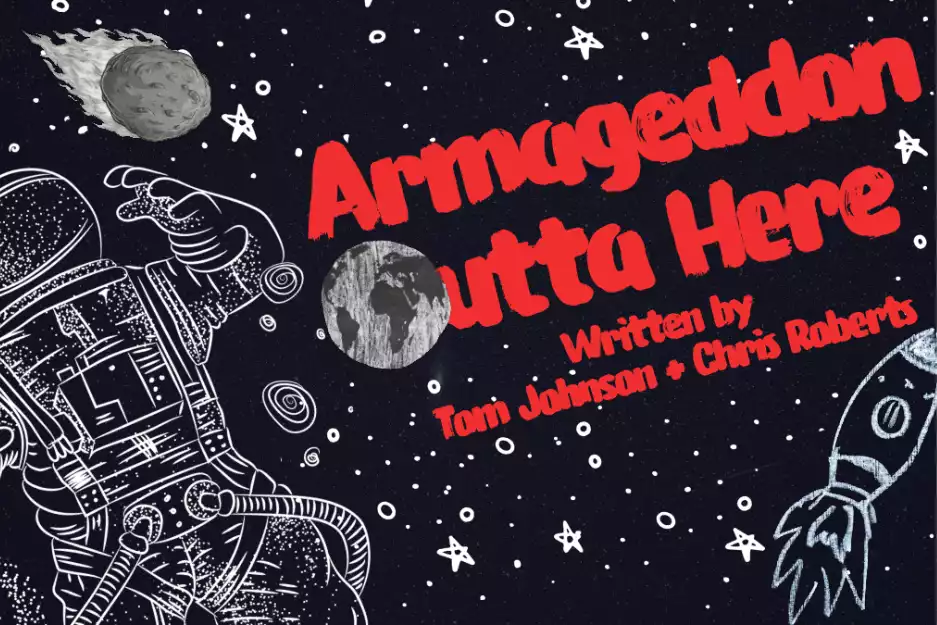
Tom Johnson is an actor first, and a sketch comedian by accident. Armageddon Out Of Here is his second Fringe show. He performs it with Rob Glenister, who he has known for years. The two do improv together in Southend-on-Sea, in Essex. The show is set around the apocalypse. Its subject is how people behave when nothing has consequences. He describes it as a celebration of the worst humanity offers. He also describes it as an excuse to shout and hit each other.
It is grotesque, violent and extremely silly. He compares it to clowning, with considerably more violence. His previous show was Verbal Diary, which was gentle and twee. He revived it from a forgotten early eighties punk musical. He funded that with money he could have put towards a house. He is quite clear that this was a poor financial decision. It runs at noon, which he seems to find funny.
We caught up with Tom to talk about Derek and Clive, Buster Keaton and real wood. We also covered why he would rather make you wince than laugh.
A celebration of the worst of us
The intellectual answer is that the show is about consequence, or the absence of it. Strip away the need to be polite and see what remains.
As soon as we don’t have to be polite anymore, we can be a right bastard.
His view of the species is not flattering. He thinks people are thicker and more perverted than we admit. The show simply removes the reasons to pretend otherwise.
It’s an hour of horrible people being horrible to themselves and each other.
He is unbothered about narrative coherence. The plot, he says, is not that important.
It’s almost like clowning — but a lot more violent.
That is the least misleading description available. Everything else is scaffolding for the shouting.
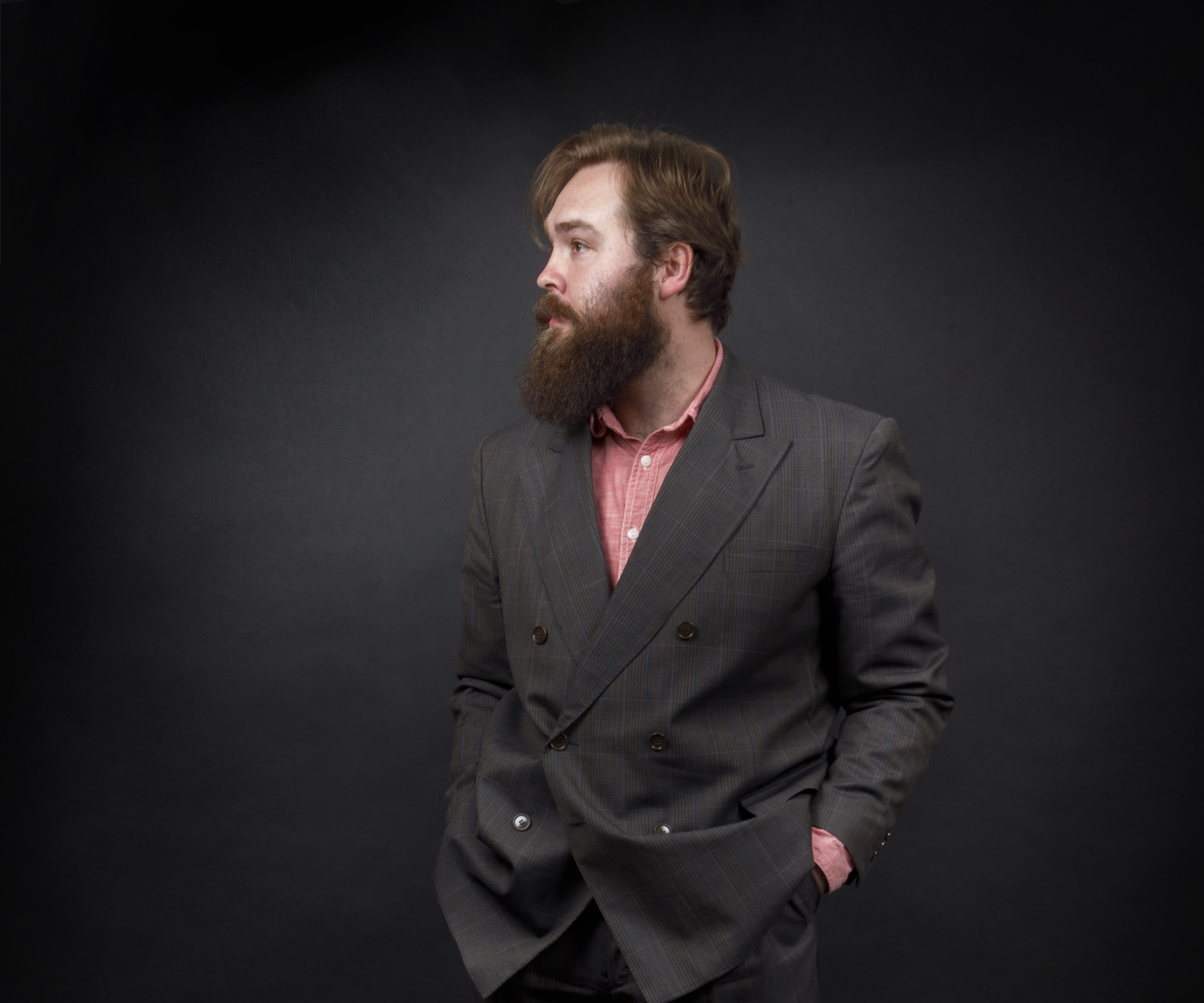
A sketch show by accident
None of this was the plan. He had just come back from the Fringe with Verbal Diary, which was gentle and sweet. He wanted something that suited him better.
So he approached Chris Roberts, who had mentioned being a writer. They met in a room repeatedly and it did not come. Johnson worked out that Roberts’ real strength was directing instead.
Roberts was also meant to be in the show, and then withdrew. Johnson brought in Rob Glenister, who arrived with a simple proposal.
Okay, let’s go muck about.
Neither of them had done that at scale before. Being entirely themselves turned out to be the format.
We trusted our instincts to be very, very stupid and silly, and it’s paid off.
The accident produced the show he had been trying to commission. It just took a different route.
Six pints deep in a pub
The writing process is not a writers’ room. It is Johnson and Glenister in a pub, getting drunk. The method is saying things to each other until one of them laughs.
Ideas at that stage are propositional and physical. What if I twisted your bollocks here, and what if you put my head through a wall. He is candid that this is where the show came from.
We never have to explain ourselves to each other, which is a lovely attribute.
Years of improv together in Southend built that shorthand. It removes the step where you justify a stupid idea.
Fagin, and the first laugh
He had never been asked about his first laugh, and had to think. It was playing Fagin in Oliver as a teenager. The part is moody and solemn, and he kept getting laughs anyway.
He liked it immediately. His description of why is not cynical at all.
It’s like all the barriers have come down, and that’s the one big thing everyone has in common — laughing.
That is a fairly warm sentiment from a man selling grotesque violence. Both things appear to be true of him.
Writing your own opportunities
He is an actor primarily, and gravitates to comedy for the live atmosphere. It holds his attention because it is different every night. He is also impatient with how acting normally works.
Actors who do not write wait for the next thing to arrive. Johnson describes himself as terrible at waiting around. He also calls himself a bit of a lazy boy, then contradicts it.
I write my own opportunities. I write a show, then I put it on.
That is the entire career strategy in nine words. It also explains why both his Fringe shows are his own.
Funnier as somebody else
Asked whether characters are easier than playing himself, the answer is immediate. He believes most standup is a stage persona regardless. Even the hyper-inflated version of yourself is still an act.
And I feel I could be the funniest version of myself when being a character.
He describes it as his natural default rather than a preference. It is also where his training went.
The ten-foot pop-up diary
Verbal Diary earned him a line he intends to use forever.
I’ll milk that till I die. I’ll have it on every poster.
Comedy Shortlist called it a comedic tour de force. The show itself was a revival of a long-forgotten piece of Fringe history, by John Otway and Paul Bradley. It was a punk musical from the early eighties that had not done well at the time.
The set was a ten-foot diary that opened like a pop-up book. You walked through the pages, and there was a door in one of them. He says it looked extraordinary and was a nightmare to get into venues.
He funded it with a windfall. He considered a house deposit, a car for his girlfriend, and a sensible investment.
Because I’m a f***ing idiot.
He is affectionate about the show and honest about the fit. It was twee and gentle, and he wanted loud and stupid. It would not have survived being made loud and stupid.
Vic and Bob, Keaton, Jackass
The television at home always had slightly older things on. Vic and Bob, Monty Python and The Young Ones. Then W.C. Fields, Rowan Atkinson, Charlie Chaplin and Buster Keaton.
Norman Wisdom is in there, and so is Victoria Wood. He praises Wood as lovely, northern, weird and musically excellent. He also rates Jackass, describing it as stuntmen hurting each other for its own sake.
The through-line is physical. He notes that he is gangly and lanky, which helps.
Derek and Clive, beside Shakespeare
He has nothing against intellectual comedy and offers Peter Cook and Dudley Moore as proof. Two blisteringly intelligent men and genuinely astute writers. He then names their filthiest work as their best.
I always think stupidity is never the opposite of intelligence.
His evidence is that Derek and Clive are two clever people playing two idiots. That gap is the whole joke, and it requires the intelligence to work.
I put it up there with Shakespeare.
He does not appear to be joking about this. It is the closest thing the interview has to a manifesto.
Slapstick, and the wince
He thinks physical comedy is dying and that slapstick deserves better. Done creatively, he rates it above a written joke. He describes it as a kind of contortionism, people doing strange violent things with their bodies.
The reaction he is chasing is not only laughter. He wants the audible recoil from a room.
If you can get that reaction from a crowd, what a brilliant thing.
Laughing is good and he will take it. But a wince is a genuine reaction, and it makes the thing a spectacle.
No fear of looking stupid
The fear of looking foolish does not apply to him, and he says so with pride.
I don’t have to worry about practising looking stupid, because I know it will come naturally.
The technical work happens in front of a mirror. He tests what faces he can pull and how grotesque he can make his body. The requirement is to strip the ego and the sexuality out of a horrible character.
People who cannot do that hold no interest for him.
I like people to look like the idiot.
It is a casting preference and a worldview at once. The show is built entirely out of it.
Where the clowns went
He is blunt about mainstream television and what has gone missing from it.
There’s a massive lack of clowns and idiots on mainstream television schedules.
His complaint is that everyone looks slick and emulates everyone else. Vic and Bob, in his view, should be on far more. He does not blame taste so much as commissioning.
Live work is where his enthusiasm actually sits. He wants to recreate the excitement he gets watching certain comedians and musicians. Then there is the bar afterwards, and a roomful of different but like-minded people.
Why the villain
Given the choice, he plays the bad one. Villains get the entrance, the cheer and the good lines. They also get to hit people and be extravagantly dangerous.
I like bad people doing things badly.
The lead is happy, which he says is fine but limited. There has to be tragedy lurking under a lead character to make them interesting. Villains need no such apparatus.
The wood, the song, and the exploding pants
His favourite moments are specific. There is a song in which the audience shouts a very rude word back. He likes watching people leave humming it.
His pants explode at one point, which pleases him. And the two of them genuinely hit each other, hard.
One sequence has Glenister smash Johnson’s head into a thick piece of wood, which breaks. Glenister suggested cardboard would be safer.
Cardboard would look s***. It has to be actual wood.
Johnson is unsure whether this makes him a sadist or a masochist. He says he rather looks forward to getting hurt, because it looks dangerous.
But we are actors, darling.
That is his defence, and he offers it without irony. Or possibly with nothing but irony.
Johnson does not want only laughter from a room. He wants the wince, the recoil, the audible ooh. That is why the wood is real wood. It is also why he refuses cardboard on principle. His theory is that stupidity and intelligence are not opposites. He cites Derek and Clive, and puts them beside Shakespeare. Armageddon Out Of Here is the show he wanted to make. Loud, chaotic, and unnecessarily theatrical, by his own description. He would also like you to buy the merch. He says he does not care whether you liked it first. That is a joke, mostly.
Armageddon Out Of Here plays the Saloon Bar at West Side Rodeo, part of Just The Tonic. The run is 6–17 August at 12 noon.