
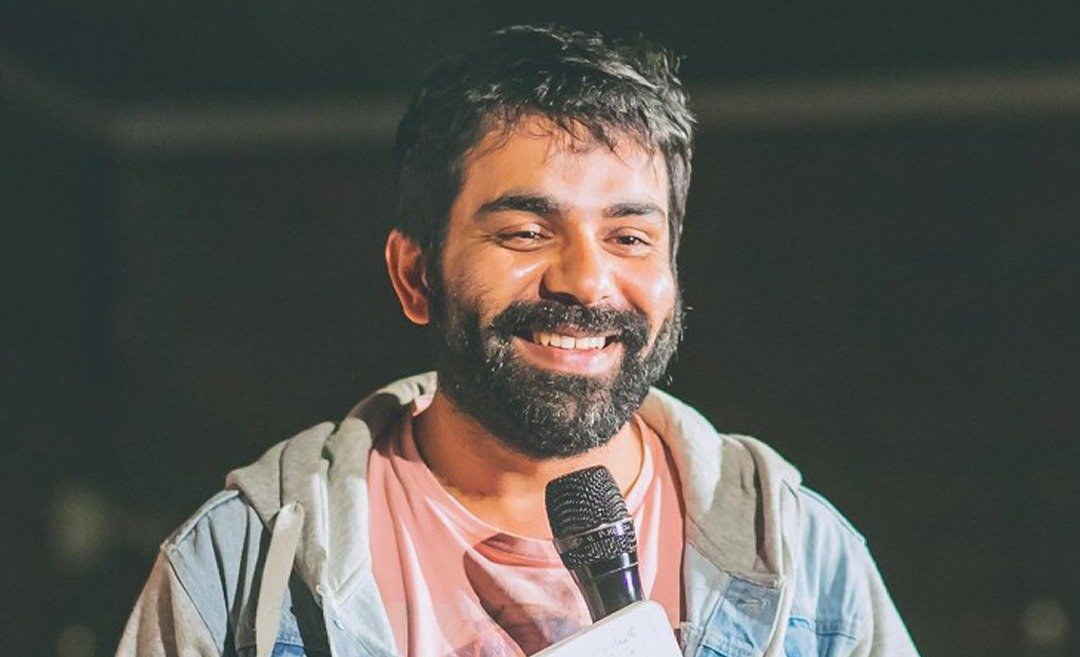
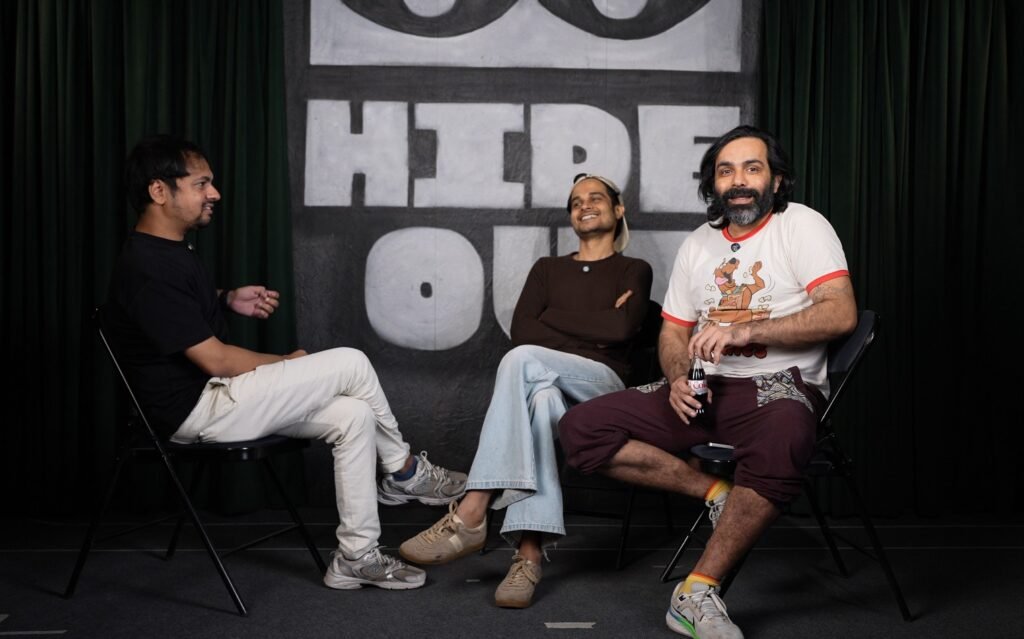
Sumit Anand is a Delhi stand-up comedian who started in 2013 and became one of the familiar faces of India’s YouTube stand-up boom. He has taken his comedy to the Edinburgh Fringe, the Melbourne Comedy Festival and Soho Theatre in London. We sat down with him, and with fellow comedian Shivanshu in the middle seat, for one of the least conventional interviews we have done.
Sumit Anand does not do the polite version of an interview. Asked about his first open mic, he said, “Forget it, next question.” Asked whether he enjoys his time on stage or just the laugh, he said, “Not all questions are supposed to be answered.” He thinks most podcasts are boring for a simple reason. “We can’t really have a conversation unless people know how to converse. That’s why most podcasts suck. Because they keep agreeing with each other.”
“We can’t really have a conversation unless people know how to converse. That’s why most podcasts suck. Because they keep agreeing with each other.”
Sumit Anand
So this was not a normal interview. It was forty minutes of argument, riffing and the occasional straight answer. Some of those answers were very good.
Jump to: Starting at the bottom · Thick skin on purpose · Never liking your own material · Training the room · Bad joke writers everywhere · Where comedy goes
Starting at the bottom
He started stand-up in 2013, and he says his confidence came from not knowing better. “I had very little self-awareness. So my lack of awareness helped my confidence. That’s how that works.” When he later performed in London, people told him he had “very New York confidence”.
He does not pretend the early years were good. “In open mics I was the worst,” he says. His approach to anything is to start low on purpose. “I start with my worse. So it only gets better from there.”
“I start with my worse. So it only gets better from there.”
Sumit Anand
His exposure to comedy also came late. There was no stand-up in his childhood, he says, just Bollywood, and his real cultural exposure came in his late 20s. Political comedians became one of his ways of understanding the world. “They will just tell me what the fuck it is.”
Thick skin, on purpose
The most surprising thing he told us was about rejection. When his first material went out, he says, it was praised everywhere, so he never built a thick skin. So he went looking for the hate. “There was just a period where I was just deliberately playing the devil. I wanted them to shit on me.” He wanted to see how much it would hurt.
“I was checking how much it hits me.”
Sumit Anand
It hit a lot, and it still does. What changed, he says, was not the pain but how fast he gets through it. “It will still hit you… It’s just that your processing power is much higher.”
For more on getting back up, read how Ceekay Brown went back on stage two weeks after a head injury.
The laughs still land the same way too. “All the shit that you did your first mic is still there inside you… you’re just like more crafty about things.” For more on how comics get through bad nights, see our piece on surviving the worst nights on stage.
A real comedian never likes his material
We told him it is hard to interview a comedian who is this honest, when so many others just want to be liked. His answer is the line we keep coming back to.
“A real comedian never really likes his material. He can see the gaps in it.”
Sumit Anand
Even a set that goes well comes with doubt. “You’re always like yeah, I could have done better.” And the hard part of stand-up, he says, is that it all happens in public. “I have to be wrong in front of them only.” Before he takes on a crowd, he needs to have thought a joke through. “I have to be very very clear about what I’m saying. So if I have the full conviction and I have thought it through only then I can fuck them.”
Shivanshu, meanwhile, is working on a craft problem of his own: finding a way to move between material about himself and material about the world without losing the room. He calls it looking for a grammar. “I haven’t cracked that grammar of transitioning from inside to outside and outside to inside.”
Twenty-five minutes of training the room
Sumit is frustrated by how long it takes audiences to catch up. He remembers gigs in Chandigarh where he would spend 25 minutes scolding and playing with the crowd before he could even start his material, until they finally came with him. It works, but it is exhausting. “How many times do I keep recreating?”
Most comedians, he says, are not trying to train an audience at all. “They are busy like please like me.” In a more exposed comedy market like the UK, he thinks he would be worrying about his own craft instead. He also has no patience for chasing trends online. “What happened to being broke? Broke is like an oak tree man, it gets solid every year.” Poor people, he adds, are more real. “They have no time to be pretentious.”
“What happened to being broke? Broke is like an oak tree man, it gets solid every year.”
Sumit Anand
Bad joke writers are found worldwide
Travelling to perform in London and Edinburgh taught him something he did not expect. The audiences were great, and they enjoyed his subtlety. But the big lesson was that people are the same everywhere. “Humor wise people are equally dumb across the world,” he says, and good joke writing is rare in every country. “Like a Noida guy can beat a Scotland guy because that guy is a better joke writer.”
Does a joke land the same way everywhere? See what comedians told us about British vs American audiences.
His theory of comedy is that it works like music or food: most people stay at the simple end, and very few go deeper. “If you go into like deeper sense of taste in it. You will just find very few people there.” He is not impressed by how many weak writers do well. “It’s so surprising that so many not good joke writers are so popular because people cannot get enough of relatability.” We have written more about the craft in how comedians write their jokes.
“It’s so surprising that so many not good joke writers are so popular because people cannot get enough of relatability.”
Sumit Anand
He likes George Carlin and enjoys watching his interviews. He also loves Jerry Seinfeld, and especially his rambling. “As a comic I like his blabbering also.” Both of them rate Talking Funny, the HBO conversation between Seinfeld, Ricky Gervais, Chris Rock and Louis C.K. “It’s great. So good.”
Where comedy goes
We suggested that in a few years, crowd work might be the only thing left, with bookings driven by social media numbers. He disagreed straight away. “No that’s not happening,” he said. “It comes back to Seinfeld only. Seinfeld said that comedy will find its way back.” People said the same about music, he points out, and music is not dead either.
Both he and Shivanshu are also tired of one particular cliché about Indian comedy. “I don’t know why they keep saying India and storytelling,” Sumit says. “What does India got to do with storytelling?” To them, it is a sign of limited exposure, not a national style. As for the state of things, Sumit is optimistic in his own way: “Comedy will find its way back whatever shit happens in the middle.”
At the end, we said we hoped it had been okay. “Oh, it’s fun,” he said. “I gotta make people get used to uncomfortableness.”
Watch and follow
View this post on Instagram
Follow Sumit on Instagram at @chant_anand. See our Instagram post about this interview, and follow Hop For Pop at @hopforpop and @thecomicsunseen.
For more conversations like this, read how comedians remember their first laugh, or browse all our comedian interviews.