

Ask a new comedian what makes a joke work and they will almost always talk about the punchline. The twist, the surprise, the last word. But two of the most respected minds in comedy point somewhere else. For Larry David and Chris Rock, a joke lives or dies on its premise, the idea the whole thing is built on. Get that right and the rest gets easier. Get it wrong and no punchline can save you.
We have heard the same idea again and again in our conversations with comedians, writers and teachers. Here is what they told us.
What a premise actually is
A premise is the base of the joke, the situation everything else stands on. In our guide to starting stand-up, the example premise is simply: my friend told me not to do stand-up comedy. The setup takes that idea and points the audience in one direction. The punchline surprises them. In our interview with Michael Morgan, the formula underneath it all was the same: premise, setup, punchline, tag.
The premise is the part nobody laughs at directly, which is exactly why it gets neglected.
Larry David: the premise itself has to be funny

Blake J. Harris spent six years writing the first authorised biography of Larry David. When we spoke to him, the most useful lesson he took from Larry, especially for stand-ups, was how Larry thinks about where the comedy comes from.
It’s so premise driven, which is not how most comedy is. Most comedy is riffing and making jokes, and there’s nothing wrong with that.
Blake J. Harris
Riffing can be funny. Two people on a podcast making jokes about each other’s apartments can be funny. But for Larry, Harris says, “the premise itself has to be funny, which is not the typical standard.” That was true of Seinfeld, it was true of Curb Your Enthusiasm, and according to Harris it was true even back when Larry was doing stand-up.
Like Larry always says, the dialogue writes itself if the premise is funny.
Blake J. Harris
Think of almost any Seinfeld plot. A man who can’t remember a woman’s name, except that it rhymes with a body part. A soup chef who throws you out for ordering wrong. Describe the situation in one sentence and people already start smiling. That is the test. Harris thinks it is a great way for a stand-up to think, “even if a stand-up doesn’t go in that direction”.
Read our full conversation: Larry David Thinks His Life Is Boring. Blake J. Harris Spent Six Years Proving Him Wrong.
Chris Rock: if it isn’t working, they didn’t get the premise
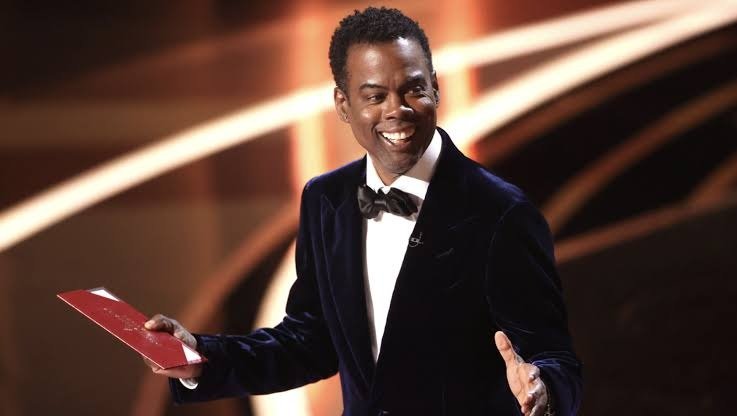
Chris Rock comes at the same idea from the stage. In HBO’s Talking Funny, where he sat down with Jerry Seinfeld, Ricky Gervais and Louis C.K. to talk shop, he made the point that when a joke is not working, the problem is often that the audience does not understand the premise. The punchline might be fine. The crowd just isn’t standing in the right place to hear it.
His answer is one you can hear all through his specials: he repeats the premise. He will say the same line two or three times, louder, slower, in a different voice, until everyone in the room is on board. Only then does the punchline come. It is a technique that came up more than once in our interviews.
Judy Carter, author of The Comedy Bible, spotted the same trick in Joan Rivers, who would get laughs from the premise before the joke even arrived.
I noticed that she would repeat her premise in three different tones. I hate her. I absolutely hate her. I hate her. And all three versions will get a laugh.
Judy Carter
Judy pointed out that Chris Rock does exactly this, and so does Wanda Sykes, who wrote for him. A strong premise is not just the start of a joke. It can get its own laughs.
See how it works in practice: Setup, Punchline, Tag, Tag, Tag: Judy Carter on How Joan Rivers Wrote a Joke.
A premise is not a joke yet
The flip side is just as important. A funny idea is where a joke starts, not where it ends. Jason Salmon told us that for his first six months on stage he could be amusing, but all he really had were “premises and thoughts and clutter”. Then a friend sat him down in a diner and they wrote one proper joke together. Within about a week he had five polished minutes, because he finally understood how to turn an idea into a joke.
And some premises are bigger than the comedian who first writes them down. Simon King goes back to his old notebooks and finds ideas he simply was not good enough to handle at the time.
It’s taken sometimes 10 years, 15 years to get to the skill set where I’m able to address the topic properly.
Simon King
A great premise is worth keeping, even if you can’t do it justice yet.
The premise travels, the wordplay doesn’t
Comedians who work in more than one language see the importance of the premise even more clearly. Manu Maciel performs in English and Portuguese and almost never translates her jokes.
The premise usually comes to mind already in the language the joke is going to be developed in.
Manu Maciel
Jokes built on a universal premise and a clear structure are the ones that survive a new audience. Jokes that lean on wordplay or local references usually have to be rewritten from scratch. We looked at this in our piece on comedy in translation.
How to put the premise first
- Say it in one sentence. If the situation isn’t funny when you describe it plainly, the punchline will have to do all the work.
- Write the premise before the punchline. Larry David’s rule: if the premise is funny, the dialogue writes itself.
- Make sure the audience is with you. If a joke dies, check whether they understood the idea before you blame the punchline.
- Repeat it. Like Chris Rock and Joan Rivers, say the premise more than once, in different tones, and let it earn its own laughs.
- Keep the ones you can’t crack yet. Simon King waited up to 15 years for some of his.
For the rest of the process, read How Comedians Actually Write Jokes: 35 Comics Explain Their Process.
Enjoyed this interview?
Hop For Pop is researched, recorded, edited and written by one person, and it’s free to read. If this one made you laugh or taught you something, you can buy us a coffee.
Buy us a coffee ☕ $5Follow
Follow The Comics Unseen and Hop For Pop on Instagram for more conversations with comedians, or browse all our comedian interviews.