

How do comedians turn trauma into comedy? Ask one where their best material came from and you will rarely hear about a good day. Over the past few months we have interviewed dozens of stand-up comedians, and the same pattern keeps turning up: the crash, the diagnosis, the death, the breakup, the fall. Sooner or later it ends up in the act. Jackie Joy, who built a whole show around the idea, put it most bluntly: “Every comedian has a trauma. That’s how we became comedians.”
Here are thirteen of them, in their own words. We have started with the hardest stories and worked towards the lighter ones, and ended with what they told us about how it is done.
- Accidents, illness and grief
- Family and childhood
- Heartbreak and exes
- Public humiliation
- How they do it: five rules
- Common questions
Accidents, illness and grief
CeeKay Brown: a car crash and a head injury

CeeKay Brown crashed her car in March 2026, two days after her birthday dinner. She passed out three times and for a while could not remember her own name. The injury was to her head, which for a comedian is the worst place: she forgot most of her own jokes. She was back on stage two weeks later, holding notes for the first time in years. Her solo show now opens and closes on a one-liner about the crash. It was not instant. “I do jokes about it now, but it took me a long time to find what was funny about it.” Read CeeKay Brown’s interview.
Stacy Price: a comedy show about her own cancer
Stacy Price made a comedy hour about her own cancer. In Citizen Otherplace the audience is checked into a hospital on arrival, and she plays about five characters, including her doctor and a medical debt collector who phones like the villain in an action film. Read Stacy Price’s interview.
Corinne Fisher: talking about a death the night it happened

Corinne Fisher does not think of her dating life as a disaster at all. What she talks about now is death. A man she had just started seeing died suddenly while she was at a festival in Toronto, and she talked about it on stage that night, after an emergency call with her therapist. “It was a lifeline,” she says: it was that or fly home. Her father’s death was different. That took about a year before she could joke about it in public. Read Corinne Fisher’s interview.
Manu Maciel: the cassette that got her through

Manu Maciel is the reverse case: comedy got her through the hard time before she ever performed. During a dark period she found a cassette of a man telling a funny story and played it whenever things got too much. “That was the first time I understood comedy could help with healing.” Years later she learned the voice was Dave Chappelle’s. Read Manu Maciel’s interview.
Family and childhood
Tom Nemec: the family that did not come
Tom Nemec has been sober since 1990 and doing stand-up for about thirty-five years. For most of that time he fed pieces of his childhood into club sets, and people kept asking afterwards whether any of it was true. A Cat in a Box, his first one-man play, is the full version. Its turning point is Hurricane Sandy, when his house was ruined and nobody in his family came, though they lived thirty minutes away. Read Tom Nemec’s interview.
Liz Coin: a first open mic about her brother
Liz Coin used her first New York open mic, in a small, sweaty room full of men, to talk about visiting her brother in prison. Read Liz Coin’s interview.
Irene Woo: telling her dad she quit Google
Irene Woo quit Google to do comedy, and the part that frightened her was telling her Chinese father. “What I was really, really scared of is losing the support of my dad.” She prepared for the call with a written plan for the year and rehearsals with her boyfriend. The call became the spine of her first hour, Golden Child. Read Irene Woo’s interview.
Winnie Stack: a childhood journal on a big screen
Winnie Stack kept a journal from the age of nine, with a drawing beside almost every entry. Twenty years later those journals are her play, @Jenna, about a childhood crush she had no words for at the time. The real entries go up on screen. After the first performance, she says, “my initial feeling was, oh my God, I’ve revealed too much. I’m going to be judged.” Then she decided the discomfort was the point. Read Winnie Stack’s interview.
Heartbreak and exes
Byron Bertram: the ex who became a character
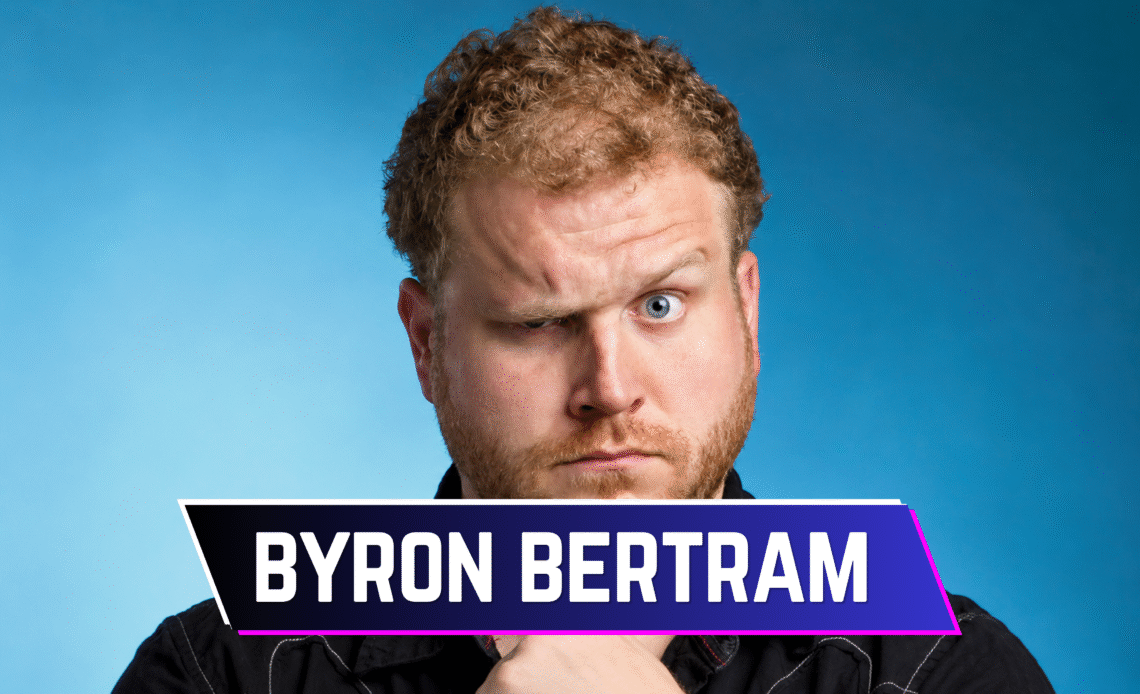
Byron Bertram spent twenty years as a good comic nobody could name. What changed it was a relationship. “I dated this crazy Russian girl and she was just so blunt and different,” he says. He learned her accent, borrowed her attitude, and built Sergei Putinski, the character that finally got him noticed. Read Byron Bertram’s interview.
Marina di Marzo: her exes, drawn in MS Paint
Marina di Marzo puts her exes on screen as MS Paint drawings she made herself. Her Fringe hour, Love in the Time of Fifth Grade, sets her childhood crushes against the dating disasters of her twenties. To draw the men she had to look them up, and one of them turned out to have met his wife a month after their breakup. “He has a full human, and I am drawing him in MS Paint like a stalker.” A friend told her the show was “kind of an anthem to being a loser”. She took it as a compliment. Read Marina di Marzo’s interview.
Public humiliation
Stephan Dyer: bombing with his father in the audience

Stephan Dyer had quit a senior job at a bank the year before. In 2018, in Guadalajara, his father came to see him perform for the first time. “And I bombed. Hard.” He decided on the spot that the story would improve if he kept going. Years later he dedicated a show to his father for his seventieth birthday. “That moment aged well.” Read Stephan Dyer’s interview.
Jackie Joy: crying after her first open mic

Jackie Joy arrived in Vancouver from Brazil with almost no English, and had already handed in notice that she was leaving Canada when she tried an open mic. Friends told her she could not do it with broken English. She went up, came off and cried, and knew she wanted more. “So comedy made me stay in Canada.” Three months in, she froze completely on a Saturday night bill and did not perform again for three months. She now keeps some of her early broken English in the act on purpose, because fixing the grammar breaks the jokes. Read Jackie Joy’s interview.
Tori Morancay: falling off a unicycle at twelve
Tori Morancay was twelve or thirteen, opening the end-of-year show at circus school, when she fell off a unicycle in front of hundreds of people. She ran backstage and cried, then went back out and finished the show. It turned out to be useful. “Bombing is never going to be as bad as falling off a unicycle in front of hundreds of people,” she says. Asked whether she could make it funny if it happened today, she said she would just laugh. Read Tori Morancay’s interview.
How they do it: five rules for turning pain into comedy
- Make it about yourself. Jason Salmon’s rule for sensitive material is to keep it personal: “People have a hard time getting angry at your personal experience.” His five rules are here.
- The disaster is the setup, not the punchline. Salmon again: “The sensitive topic is the setup. The humanity is the punchline.” Stacy Price’s cancer show gets its laughs from a debt collector, not from the illness.
- Do not ask for pity. Tori Morancay describes her show as a way of processing what happened “without being like, oh, you should feel bad for me”. Marina di Marzo’s version: “I believe comedy is about sharing your embarrassment and being in a community about your embarrassment.”
- Honest comes before funny. Winnie Stack refused to tidy the embarrassing parts of her journals. “I tried to focus more on what is the most honest I can be.”
- Wait until it is ready, however long that takes. Corinne Fisher talked about one death the same night and needed a year for another. CeeKay Brown took months to find the joke in her crash.
The person who has taught this longest is Judy Carter, who wrote the book a generation of comics learned from. Her whole philosophy fits in four words, “don’t get mad, get funny”, and she explained to us why it works.
“When you can laugh at whatever your problem is, it’s a way for you to move on emotionally from it. The laughter is revenge, and if you’re getting paid for it, that’s the best.”
Common questions about comedy and trauma
Why do comedians joke about painful experiences?
Because it helps them, and because audiences recognise themselves. Judy Carter says laughing at a problem is a way to move on from it. Marina di Marzo says the reward is the person who comes up afterwards to say the same thing happened to them. Winnie Stack hears the same from strangers who stay behind after her show.
How do you turn a bad experience into a joke?
Start with what actually happened and tell it as your own story. Use the painful part as the setup, and look for the laugh in something human around it: the debt collector, the MS Paint drawing, the search for a man called Roger. If you are new to writing jokes, our guide to the premise, setup, punchline and tag explains the structure.
How soon is too soon to joke about something?
There is no fixed answer. Corinne Fisher talked about one loss on stage the same night and waited a year for another. CeeKay Brown needed months after her crash. What they have in common is that each waited until she could find what was funny in it.
For more conversations like these, browse all our comedian interviews.